ServicesDock Levelers
Dock Leveler Repair in Bethlehem
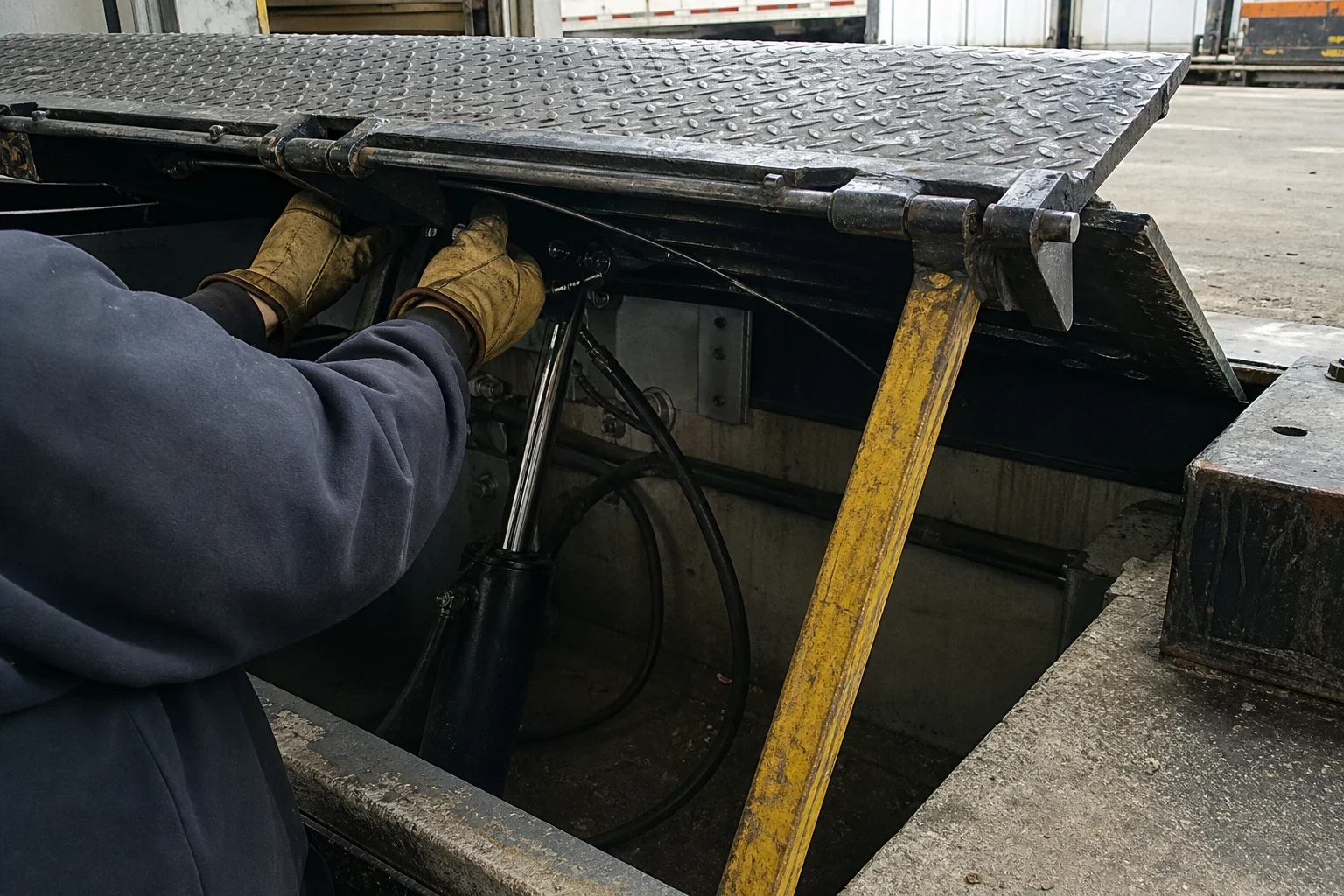
We repair hydraulic, mechanical and air-powered dock levelers at warehouses, plants and receiving docks. We find out why the lip won't extend or the deck drifts, fix the cause, and tell you what the leveler will need over the coming year so the cost lands in your budget instead of your downtime.
Leveler repair that starts with the cause
A dock leveler bridges the height gap between your dock floor and a trailer bed. Every forklift crossing loads the lip hinge, the rear hinge and the support structure, so wear builds quietly for months before a lip drops short or a deck sticks halfway. By then you are usually working around a dead door during a busy shift.
We look at the whole unit, not just the part that stopped working. A lip that won't fully extend can be a bent hinge pin, a seized lip, a weak lip spring or a tired extend cylinder, and each one is fixed differently. Replacing the wrong part costs you twice.
After the repair, you get a straight read on the rest of the leveler: what is fine, what is wearing, and roughly when it will need attention. That lets you schedule the next round of work for a slow week and put it in next year's numbers.
What our dock leveler work covers
- 01
Lip and hinge repair
We free seized lips, replace worn or bent hinge pins, and re-weld cracked hinge tubes. A lip that hangs crooked or lands short on the trailer bed is a tripping and tipping hazard, so we treat it first.
- 02
Hydraulic system service
On hydraulic levelers we trace leaks to the lift cylinder, lip cylinder, hoses or fittings, replace seals, and check the power unit and velocity fuse. The velocity fuse is what stops the deck from free-falling if a trailer pulls away, so we test that it locks.
- 03
Mechanical spring and hold-down work
Mechanical levelers rely on lift springs, a hold-down ratchet and a release chain. We adjust or replace springs that no longer raise the deck and repair hold-downs that let the deck float up under load.
- 04
Air bag levelers
For air-powered units we inspect the air bag, blower motor and controls, and replace bags that have chafed or split.
- 05
Deck, pit and bumpers
We repair cracked deck plate and broken support beams, reset loose curb angles, and replace worn dock bumpers. Worn bumpers let trailers strike the leveler and the building, which speeds up every other kind of damage.
Questions about Dock Levelers?
Call(610) 831-3834Signs your dock leveler needs attention
The lip falls short
If the lip stops partway or doesn't rest flat on the trailer bed, the hinge, lip spring or lip cylinder is usually the cause. Forklifts hitting that step damage both the lip and their own wheels.
The deck drifts or bounces
A hydraulic deck that slowly sinks points to a leaking cylinder or valve. A mechanical deck that bounces or rises under load often means a worn hold-down.
Oil in the pit
Hydraulic fluid under the leveler means a seal, hose or fitting is leaking. Low fluid makes the deck slow and weak, and an oily pit is a slip hazard during inspections.
Cracks at welds and hinges
Look along the rear hinge and the lip hinge for cracked welds or a gap that keeps widening. These grow with every crossing and are cheaper to fix while small.
Chewed or missing bumpers
When bumpers are worn to the bolts, trailers start hitting the leveler's front edge and the dock face. Replacing bumpers is a small job that protects much more expensive steel.
Salt and rust on the toe guards
Winter brings road salt in on every trailer, and freeze-thaw cycles work into the pit. Rust on toe guards and the lower frame is worth catching before it reaches structural members.
How a leveler repair goes
- 1
We talk through the symptoms
On the phone we ask what the leveler is doing, its type and roughly how old it is. That tells us which parts to bring and how long the door is likely to be down.
- 2
Inspection with the door locked out
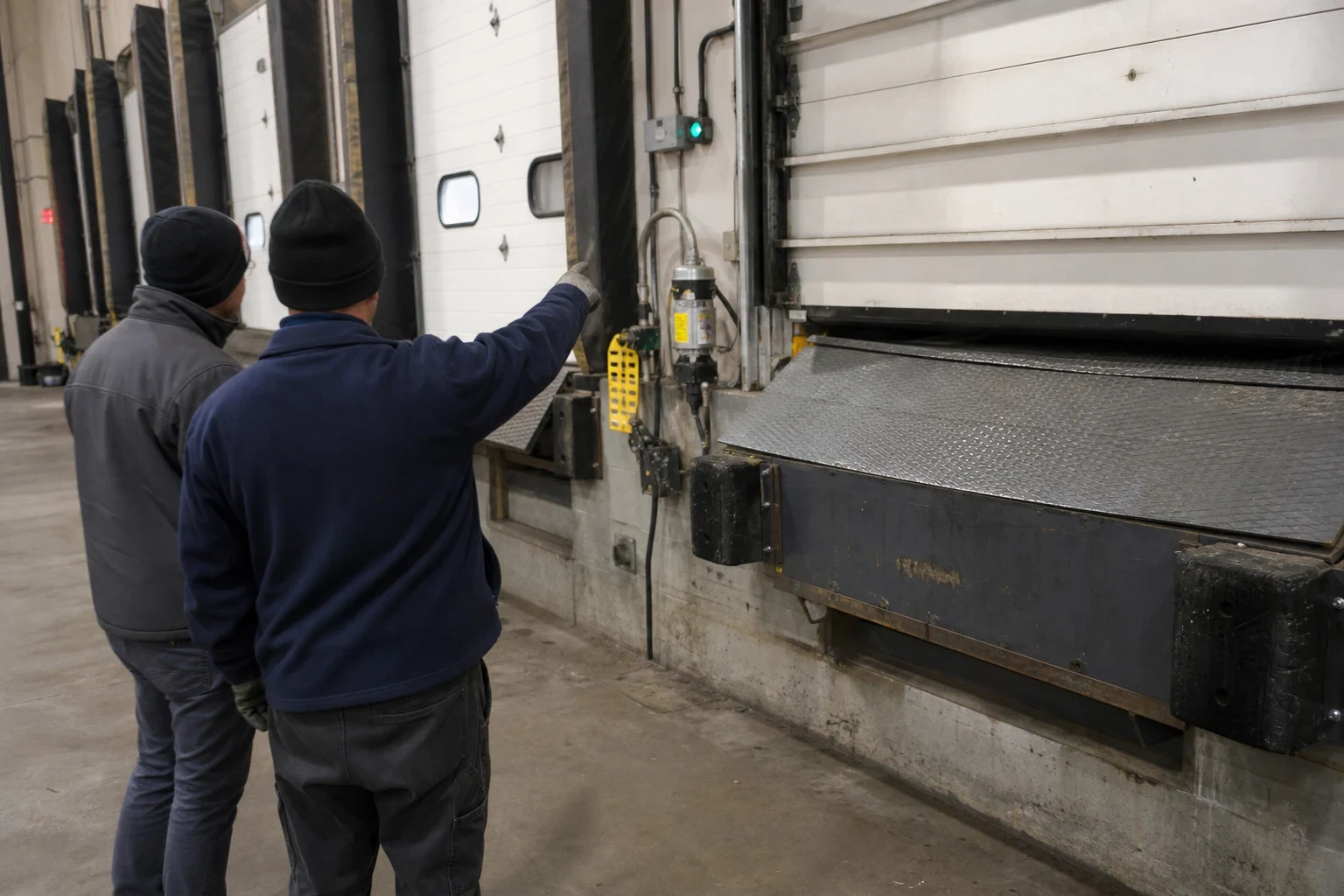
We confirm no trailer is at the door, set the maintenance strut, and lock out power before anyone goes under the deck. Then we check hinges, cylinders, springs, welds and the pit, and photograph what we find.
- 3
Repair on your schedule
We do the work at a time that fits your receiving window, including between shifts where that helps. Only the door we are working on is taken out of service.
- 4
Test cycles and a written outlook
We cycle the leveler through full raise, lip extension and stored position, and test the velocity fuse on hydraulic units. You get a written summary of what we fixed and what to plan for next.
What moves the cost of a leveler repair
Most leveler repairs are priced by the part that failed and how much of the unit has to come apart to reach it. We give you a line-item estimate before the work starts, so you can approve it or plan it for a later date. If repair no longer makes sense, we tell you and explain why.
- Leveler type
- Hydraulic, mechanical and air-powered levelers use different parts. Hydraulic cylinder and power unit work usually costs more than a spring adjustment.
- What else the failure damaged
- A lip that dragged for weeks may have bent the hinge or cracked the deck plate. Catching a problem early keeps the repair to one part.
- Condition of the pit and curb angles
- Broken concrete or loose curb angles have to be addressed before a leveler can sit level and stay that way.
- Timing and access
- Work scheduled between shifts or around a full trailer lineup takes more planning. Parts for older or discontinued models can also take longer to source.
Common questions about dock levelers
Should we repair our leveler or replace it?
If the deck, frame and pit are in good shape, repair usually gives you more for the money, even on an older unit. Replacement earns its cost when support steel is cracked in several places or parts are no longer made. We share photos of what we found and give you a direct answer. When new is the right call, our Loading Dock Equipment Installation page walks through how that works.
Which leveler brands can you work on?
Our technicians handle the hydraulic, mechanical and air-powered levelers typical in warehouses and plants. Share the make and model when you call, and we confirm parts before we schedule the visit.
How long will the door be out of service?
Many repairs, such as a hydraulic seal, hinge pins or bumpers, wrap up in a single visit. Larger jobs like replacing deck plate or repairing the pit run longer. You get a time estimate up front so you can send trucks to other doors.
Is it safe to keep using a leveler that drifts?
A sinking deck or a short lip leaves a step that can tip a forklift or drop a load. We recommend closing that door until it has been checked. A working vehicle restraint alongside the leveler adds protection against a trailer pulling out too soon.
How do we stop this from happening again?
Routine inspection and greasing of hinges, springs and hydraulic parts catches most wear while it is still small. Our Loading Dock Preventative Maintenance service puts every leveler on a schedule so repairs can be planned and budgeted ahead of time.
Put your leveler repairs on a plan
Tell us which door is giving you trouble and what it is doing. We will explain the likely cause, what the repair involves, and how to schedule it around your receiving hours.