ServicesOverhead Doors
Overhead Door Repair and Service in Bethlehem
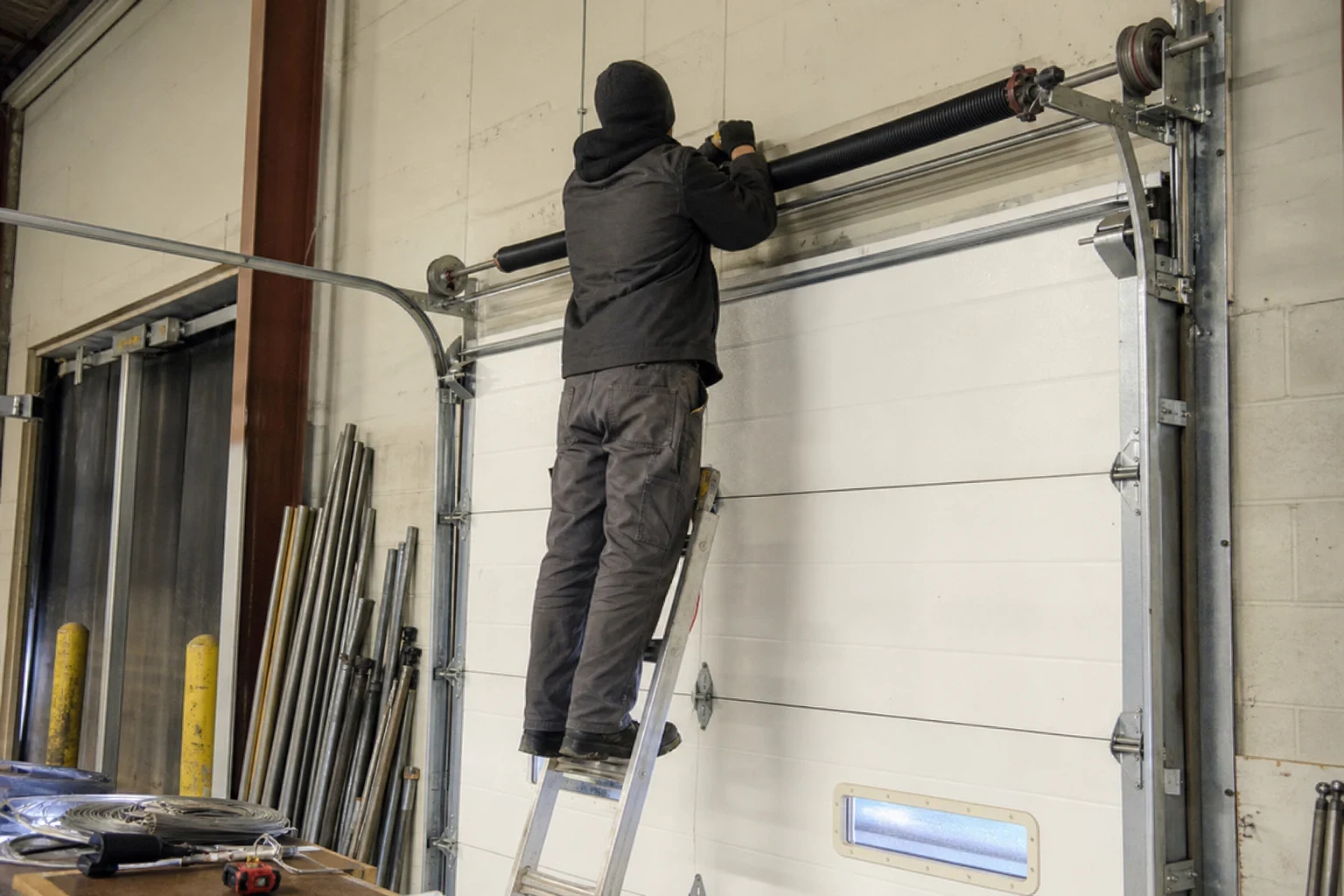
We repair and replace the sectional overhead doors on your loading dock: springs, cables, rollers, panels, seals and operators. We find the worn parts early, explain what each one is doing, and schedule the work so a door does not jam open or shut in the middle of a shift.
Dock doors wear on a schedule you can see coming
A dock overhead door at a busy warehouse can cycle dozens of times a day. Every cycle loads the torsion springs, flexes the hinges and rolls each wheel through the track radius. Those parts have a finite life, and most of them give warning before they quit: a spring that gaps between coils, a cable fraying at the bottom bracket, a roller that wobbles in the track.
Our job is to catch those signs, tell you which repairs belong in this quarter's budget and which can wait, and do the work when your receiving schedule allows. When a door is too damaged or too old to justify more parts, we say so and walk you through replacement options, including insulated panels and operator upgrades. Cold winters with road salt tracked in on trailers are hard on bottom sections and seals, so we look at those closely on every visit.
Overhead door work we handle
Springs and lift cables
Broken or worn-out springs are swapped in matched pairs and sized to what the door weighs, so it stays balanced and the operator is not hauling extra load. We check lift cables and drums too, and replace them as a set when we see fraying or worn grooves.
Track, rollers and hinges
A door that sticks or jumps usually has worn steel or nylon rollers, cracked hinges or bent track. We straighten the vertical and horizontal track, reset the radius and tighten any loose jamb brackets.
Replacing damaged sections
A trailer or forklift hit typically ruins one or two sections rather than the entire door. When a matching panel is still made, we match your door's gauge, profile and insulation, and we brace wide sections that sag with struts.
Bottom astragal and weather seals
Ripped bottom rubber and tired perimeter seals let water, debris and cold air inside. New seals let the door shut snug to the dock floor, which keeps the heat you pay for in the building.
Openers and safety equipment
We repair and replace jackshaft and trolley operators, set force and limits, and test reversing edges and photo eyes so the door stops and backs up correctly. Every operator visit includes that safety test.
Signs a dock door needs attention
- The door feels heavy or drifts
- If a door will not stay put halfway up when disconnected from the operator, the springs have lost tension. Left alone, that strain shifts to the operator and shortens its life.
- Gaps in the spring coils
- A visible gap in a torsion spring means it has already broken. The door may still move on the remaining spring, but it is unbalanced and should be taken out of service until repaired.
- Grinding, popping or a crooked close
- Noise and a door that closes unevenly usually point to worn rollers, a frayed cable or track out of plumb. These are inexpensive fixes now and a pulled door later.
- Dented or bowed sections
- A section that bows after an impact can bind in the track and crack the hinges above it. Light at the edges or a door that no longer seals at the floor is a related warning.
- Operator reversing for no reason
- Random reversals often come from misaligned photo eyes, a damaged edge sensor or a door that is fighting its own weight. We trace the cause rather than turning up the force setting.
How a door repair visit runs
- 1
You call and describe the door
Tell us the door size, what it is doing and how often it cycles. We set a visit around your receiving and shipping windows.
- 2
Inspection and findings
We check springs, cables, drums, rollers, hinges, track, panels, seals and the operator, and take photos of what we find. You get a written breakdown that separates what needs doing now from what can be planned.
- 3
Scheduled repair
We bring parts sized for your door, lock out the operator, and secure the door before any spring or cable work. The bay is out of service only while we work on it, and adjacent doors stay in use.
- 4
Testing and cleanup
We run the door through full cycles, check balance with the operator disconnected, test the safety reversal and leave the dock floor clear of old parts and packaging.
What drives the price of overhead door work
Dock door repair pricing mostly comes down to the parts required and the time it takes to fit them safely. We list both separately so you can weigh repair against replacement and plan spending across multiple doors. You get your quote by phone or after we inspect, not as a guess.
- How big and heavy the door is
- A larger insulated door weighs more, so it takes bigger springs, stronger cables and more labor to work on safely.
- Whether parts are available
- Matching panels for older or discontinued doors can be tough to find. In some cases a new door comes in cheaper than hunting down one section.
- How much the impact damaged
- A single dented section is a quick replacement. When a hit bends the track, the jambs and several panels, it needs more parts and more time.
- Opener and controls
- Fixing a drive or setting limits costs much less than a new operator, and adding interlocks or sensors increases the scope.
- Door count and scheduling
- Doing several doors on one planned visit splits the travel and setup among them, which is part of why scheduled work usually costs less than fixing doors one at a time as they fail.
Common overhead door questions
- If one torsion spring broke, should both be replaced?
- In most cases, yes. Both springs have run the same number of cycles, so the one still working is close to wearing out as well. Changing the pair keeps the door in balance and saves a return trip a few months later.
- Can only the damaged panels be swapped out?
- Frequently, as long as a panel matching your door's brand, profile and thickness is still produced. We confirm that during the inspection. If nothing matches, we quote a complete new door so you can choose.
- How long will the bay be down?
- Work on springs, cables and rollers usually takes the bay out for part of a day. Replacing sections or installing a new door runs longer, so we book those during your quietest receiving period.
- Can we keep running a door with a broken spring?
- We recommend against it. The door is out of balance, the operator is straining, and if the other spring or a cable gives out, the door can fall. Leave it shut and call us to schedule the repair.
- Do you also service rolling grilles and high speed doors?
- Yes. Because they work differently, each has its own page: High Speed Doors and Rolling Grilles. One visit can cover all of them, plus dock levelers and vehicle restraints through Loading Dock Preventative Maintenance.
Get your dock doors on a plan
Tell us how many doors you run and what they are doing. We will set an inspection and give you a clear list of what to fix now and what to budget for next.