ServicesPreventative Maintenance
Bethlehem Loading Dock Preventative Maintenance
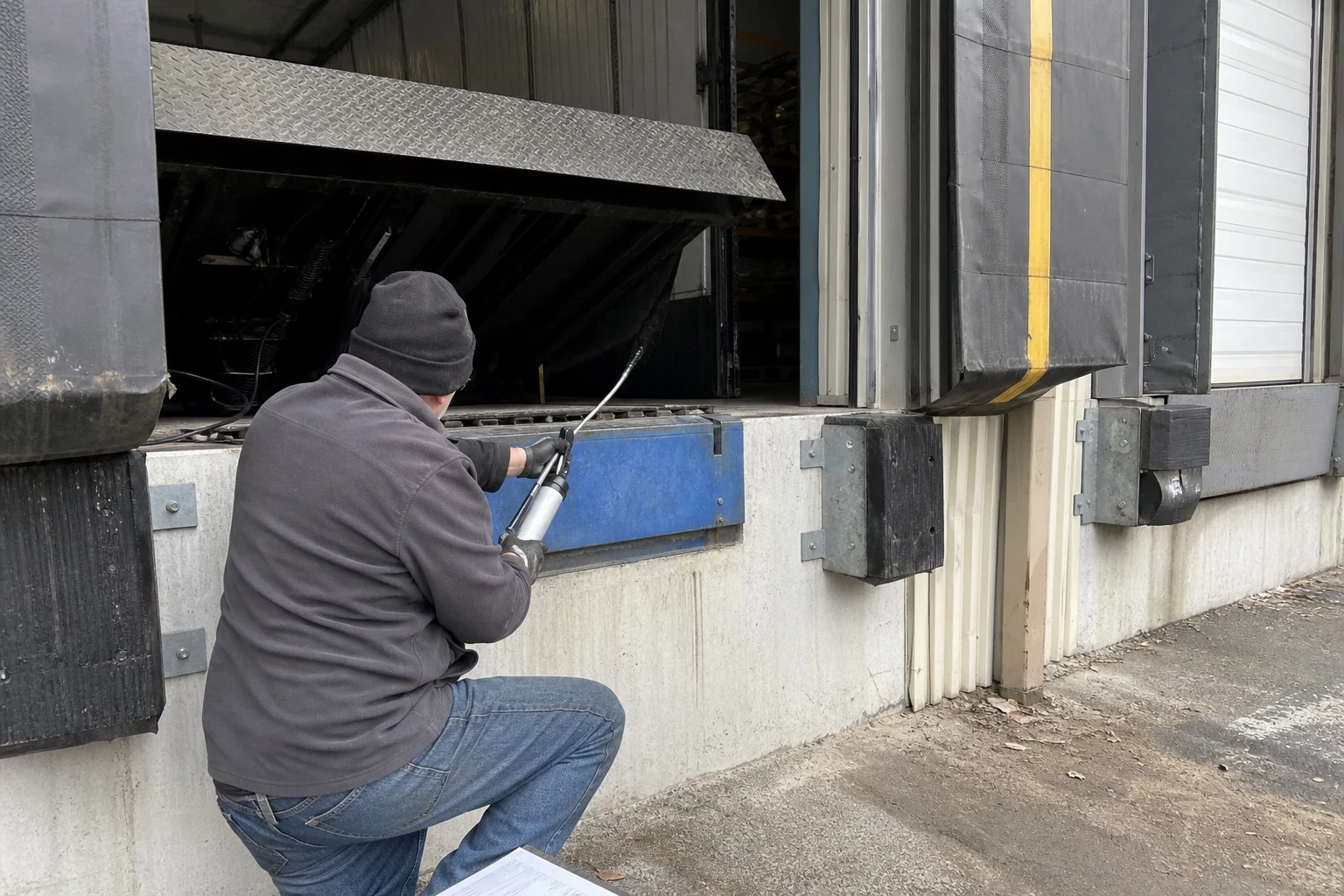
On a regular schedule, we inspect, adjust and grease your dock levelers, overhead doors, vehicle restraints and seals. A written report shows what we found and what is wearing, so repair costs go into your budget rather than interrupting a shift.
What a Maintenance Visit Actually Does
Dock equipment rarely fails without warning. A hydraulic leveler loses fluid slowly through a weeping cylinder seal. A torsion spring on an overhead door fatigues over thousands of cycles. A restraint hook binds as its track collects grit. Each of these shows up during a careful inspection weeks or months before it stops a trailer from loading.
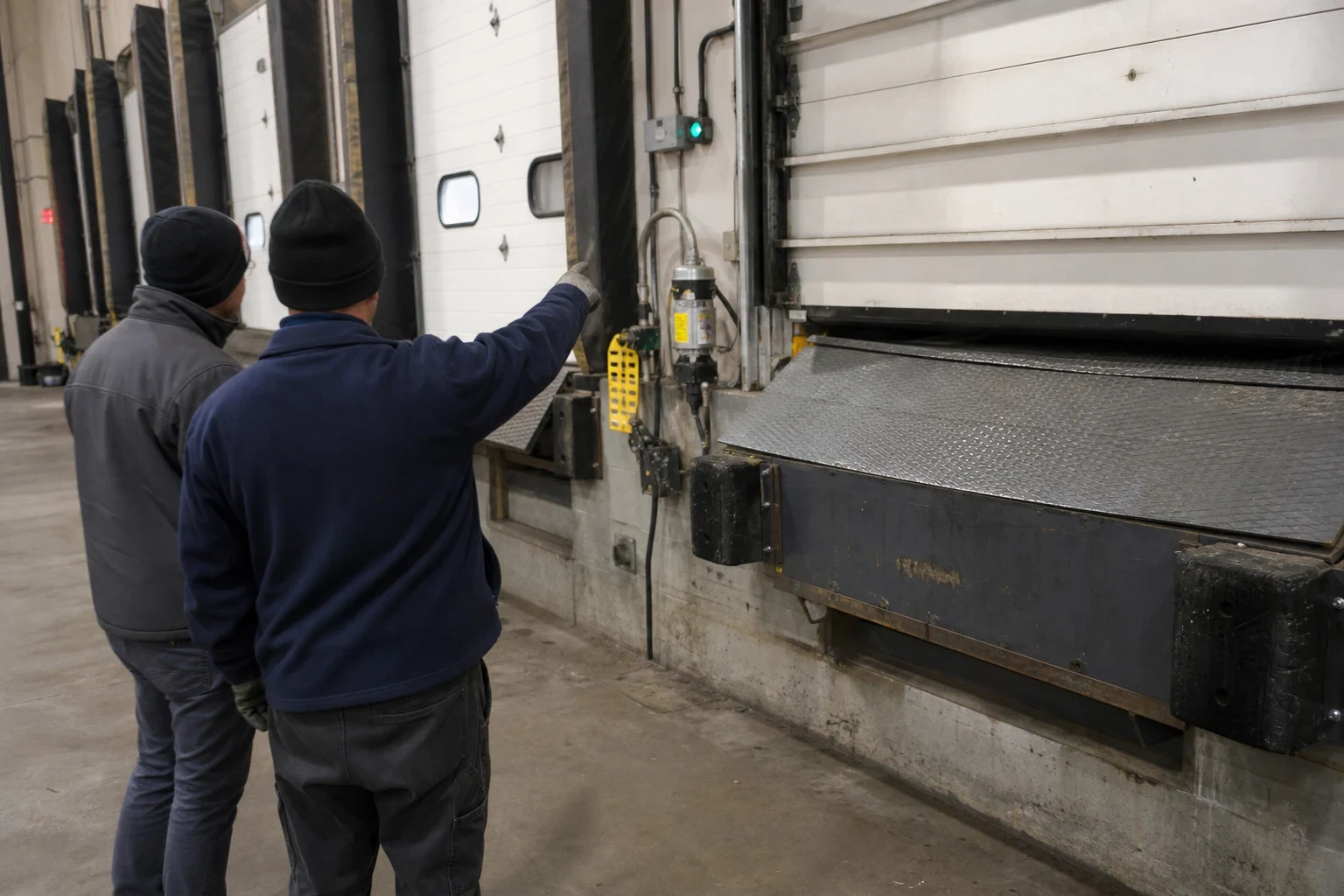
Our preventative maintenance program puts trained eyes on every door position at your facility on a regular interval. We fix the small things on the spot, like a loose lip hinge pin or a dry roller, and we document the larger items with photos and a plain recommendation. That gives your facilities or operations manager time to plan the work, order parts and schedule it around receiving.
What We Check at Every Dock Position
- 01
Dock levelers
We inspect the deck, lip and lip hinge for cracks and bent sections, check the hold-down and safety legs, and test the maximum-service-position stop. On hydraulic units we look at fluid level, hoses and cylinder seals. On mechanical units we check the main springs and the release chain.
- 02
Overhead doors
We check torsion springs, cables, drums, rollers, hinges and track alignment, then balance the door. Operators get a check of limits, reversing function and photo eyes.
- 03
Vehicle restraints
We cycle each restraint against a trailer or test bar, inspect the hook and carriage, and confirm the inside and outside light communication works. A restraint that shows green when it is not engaged is a safety problem, so this gets close attention.
- 04
Seals, shelters and bumpers
Torn dock seal fabric and worn foam let in weather and raise energy costs. We note bumper wear, because a bumper worn past its face lets trailers strike the leveler lip and the building wall.
- 05
High speed doors and rolling grilles
Where you have them, we check curtain condition, breakaway reset, drive components and safety sensors on high speed doors, and slat condition, locks and guides on rolling grilles.
- 06
Lubrication and adjustment
Hinges, rollers, bearings and pivot points get the right lubricant, and we make the minor adjustments that keep wear from compounding.
Questions about Preventative Maintenance?
Call(610) 831-3834Signs Your Docks Are Due for Scheduled Service
The leveler drifts or rises slowly
A deck that sinks under load or takes too long to raise usually points to low hydraulic fluid, a leaking seal or a tired pump. Caught early, that is a seal kit, not a new power unit.
Doors are loud, jerky or uneven
Grinding, banging or one side lagging often means worn rollers, a frayed cable or a spring losing tension. Doors that run out of balance also wear out operators faster.
Seals are torn or crushed flat
Gaps around the trailer let cold air and moisture into the warehouse. Through a Lehigh Valley winter that adds up on heating bills and puts ice on the dock floor.
Repairs only happen after a breakdown
If every service call is unplanned, you are paying for rush parts and lost loading time. A schedule turns those into predictable line items.
How a Maintenance Visit Runs
- 1
Walkthrough and door list
On the first visit we walk the dock with your contact and record every position: leveler type, door size, restraint model and seal style. That list becomes the baseline for every visit after.
- 2
Work around your receiving schedule
We service one or two positions at a time and coordinate with your dock lead so trailers keep moving. Each position is locked out and tagged before we work on it.
- 3
Inspect, adjust and lubricate
We run each component through the checklist above, handle minor adjustments and lubrication, and test every safety function before putting the door back in service.
- 4
Written report with photos
You receive findings for each position, ranked by urgency, with photos and a line-item estimate for anything that needs repair. You decide what to do now and what to plan for next quarter.
What Shapes the Cost of a Maintenance Program
Pricing depends on how much equipment we service and how often. We quote by phone after learning about your dock, and we put the program terms in writing so there is no guesswork when the invoice arrives. Repairs found during a visit are estimated separately, so you approve them before any work happens.
- Number of dock positions
- A facility with four doors and one with forty need very different amounts of time. We price per position, so the cost scales with your dock.
- Equipment mix
- Hydraulic levelers, mechanical levelers, high speed doors and vehicle restraints each take different checks. More equipment types at a position means more time there.
- Visit frequency
- High-cycle distribution docks often need quarterly service, while lighter-use docks may need it twice a year. More frequent visits usually mean smaller repair bills between them.
- Age and condition
- Older equipment, or docks that have gone years without service, often take longer on the first visit to clean, adjust and document.
Preventative Maintenance Questions
How frequently does dock equipment need service?
Every three to six months suits most docks. Multi-shift distribution centers generally need quarterly visits, since their levelers and doors cycle so heavily. We set the interval once we have seen your equipment and traffic, not beforehand.
Will you service equipment someone else installed?
Yes. We work on levelers, doors and restraints from most manufacturers. When parts for an older unit are scarce, we let you know early so you can plan a replacement through our dock leveler or loading dock equipment installation services.
Does maintenance close down our dock?
No, not the whole dock. We go one position at a time and coordinate with your team, so the other doors stay open while one is serviced. Visits can also be booked during slower receiving hours if you like.
What if you find something that needs fixing?
Adjustments, lubrication and other small fixes are covered during the visit. Bigger items go on the written report with photos and an itemized estimate. If a position is unsafe, such as a failed safety leg or a restraint that won't engage, we tell you immediately and tag it out of service.
Will the report help us plan our annual budget?
That is a big reason facilities start a program. Findings are ranked by urgency, so you can see which parts will probably need replacing in the months ahead and plan for them rather than react.
Put Your Dock Repairs on a Schedule
Tell us how many positions you have and what equipment is on them. We will suggest a service interval and explain what each visit covers.