ServicesVehicle Restraints
Vehicle Restraints in Bethlehem
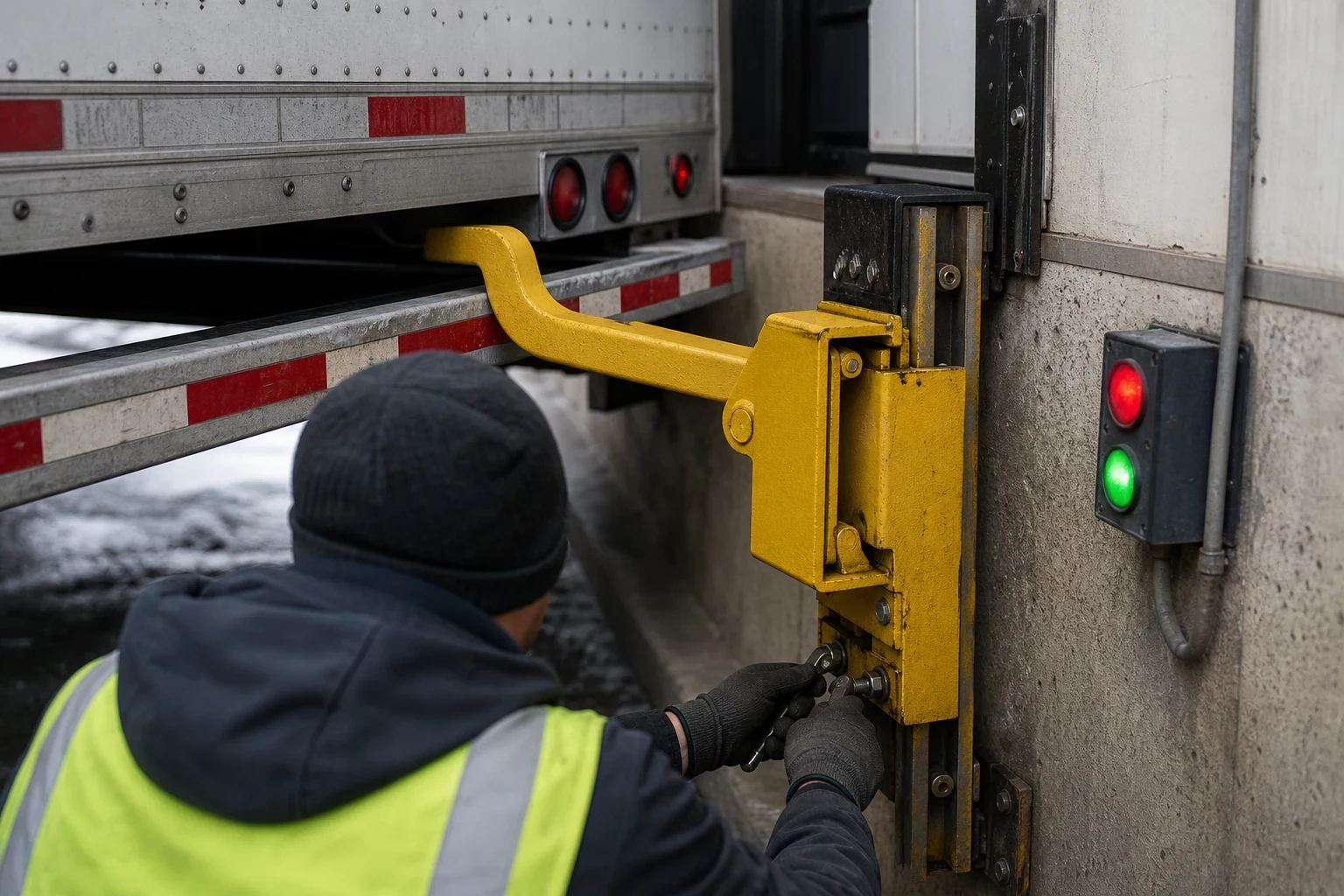
We repair, service and install vehicle restraints that keep trailers from creeping or pulling away while forklifts work inside them. We find worn hooks, tired motors and failing sensors early, then schedule the fix around your receiving windows so a door never goes down without warning.
What a Vehicle Restraint Does and When It Needs Attention
A vehicle restraint holds the trailer against the dock while loading happens. Most use a rotating hook that rises to catch the trailer's rear impact guard, the RIG bar. Wheel-based units use a barrier arm or powered chock against the rear tires instead, which helps with trailers that have damaged, missing or oddly placed RIG bars. Either way, the restraint is what stops trailer creep and early departures, two of the main causes of forklifts dropping between the dock and the trailer.
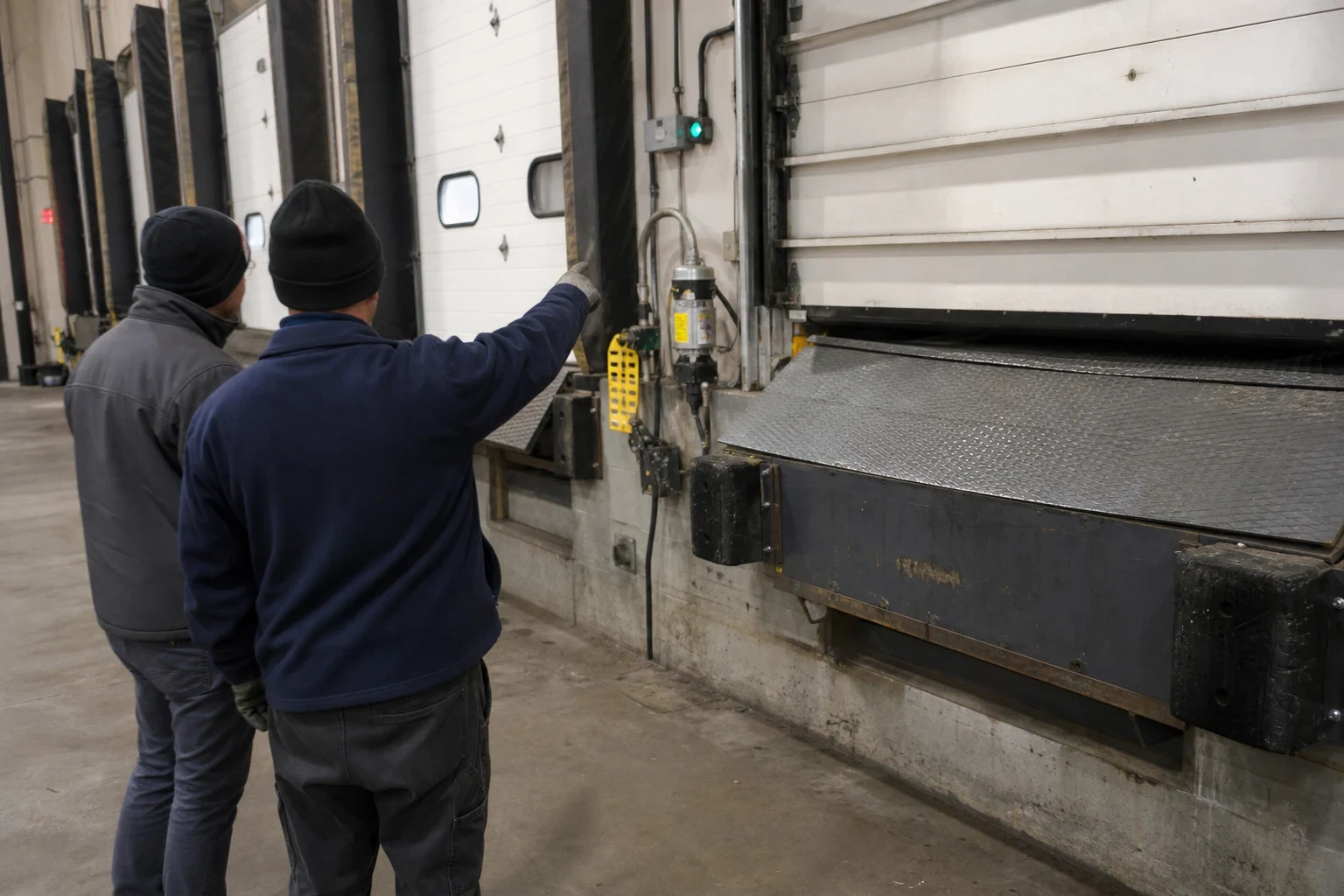
Restraints rarely fail all at once. A hook starts engaging slowly, a light stays red after release, or the carriage hangs up on its track. Those are the moments to plan a repair, because the next step is usually a dock door tagged out during a busy week. We look at the whole system, including the lights, controls and any interlock with the dock leveler and overhead door, and tell you plainly what needs work now and what can wait for the next budget cycle.
What Our Vehicle Restraint Work Covers
- Hook and carriage service
- We inspect the hook, its pivot pins and the spring-loaded carriage that rides up and down the track. Worn pins and bent carriage rollers cause slow or partial engagement, so we measure wear and replace parts before the hook stops seating on the RIG bar.
- Drive and hydraulics
- Electromechanical units get motor, gearbox and brake checks. Hydraulic units get checks for leaks, fluid condition and cylinder seals, since a weak cylinder lets the hook drift down under load.
- Lights, sensors and controls
- The red and green communication lights inside and outside the door are how drivers and forklift operators know it is safe. We test limit switches, proximity sensors and the control panel so the lights match what the hook is actually doing.
- Interlocks with levelers and doors
- Many facilities wire the restraint so the dock leveler cannot operate until the trailer is secured. We troubleshoot and set up those interlocks so the sequence works every time, not only when someone remembers.
- Track and mounting repair
- Repeated trailer impacts loosen anchors and bend the track on the dock face. We straighten or replace track sections and re-anchor the unit so it stays plumb.
- New restraint installation
- When a unit is beyond sensible repair, we help you pick a hook or wheel-based model that fits your trailer mix and install it. Our Loading Dock Equipment Installation page covers that work in more detail.
Signs Your Vehicle Restraint Needs Service
Slow or incomplete engagement
If the hook takes several tries to catch or stops short of the RIG bar, the carriage, springs or drive are wearing. Partial engagement can look secure from inside while giving the trailer room to move.
Lights that disagree with the hook
A green light while the hook is down, or a red light that will not clear, usually points to a failed sensor or limit switch. Operators stop trusting the lights, and that is a safety problem on its own.
Grinding, chatter or a stalled motor
Noise during travel often means dry or damaged rollers, a failing gearbox or debris in the track.
Hydraulic fluid under the dock
Oil on the drive approach means a seal or hose is going. Left alone, the hook loses holding force.
Visible damage on the dock face
Bent track, cracked welds or loose anchors from trailer strikes shift the unit out of alignment. Winter salt speeds up corrosion on damaged steel, so impact damage is worth fixing before the cold months.
How a Restraint Job Runs
- 1
Talk through the doors
You tell us by phone how many doors you run, which restraints you have and what operators have noticed. We set a visit time that fits around your receiving schedule.
- 2
Inspect and test under cycle
We run each restraint through full engage and release cycles, check the lights and interlocks, and look at the track, anchors and drive. We photograph worn parts so you can see what we found.
- 3
Written findings by priority
You get a line-item estimate that separates safety items needing attention now from wear that can be planned into a later quarter. That gives you real numbers for budgeting instead of a surprise repair.
- 4
Repair one door at a time
We work door by door so the rest of the dock keeps moving, then test each restraint through several cycles with the lights and interlocks before handing it back.
What Moves the Cost of Restraint Work
Restraint pricing depends mostly on what type of unit you have and what condition it is in under the cover. We price after we have seen the equipment and cycled it, and the estimate lists parts and labor separately so you can decide what to do now and what to schedule later.
- Restraint type and drive
- Hook restraints, wheel-based units, hydraulic and electromechanical drives all use different parts. Some older or discontinued models need parts sourced or adapted, which adds time.
- Condition of track and mounting
- A worn hook on a solid track is a simple swap. Bent track, cracked welds or spalled concrete around the anchors add fabrication and anchoring work.
- Controls and interlocks
- Replacing a light set is quick. Rewiring a control panel or adding leveler and door interlocks takes more labor and testing.
- Number of doors and timing
- Servicing several doors in one visit costs less per door than separate trips. Planned work during slow hours also avoids the disruption of an urgent repair mid-shift.
Vehicle Restraint Questions
Something not covered here? (610) 831-3834
Should we use a hook restraint or a wheel-based restraint?
Hook restraints are compact and work well when most trailers have intact RIG bars. Wheel-based restraints secure the tires, so they handle damaged or missing RIG bars, liftgates and low-profile trailers better. If many of your carriers bring unusual trailers, a wheel-based unit is often the better fit. We look at your actual trailer mix before recommending either.
Can you repair our existing restraint, or does it need replacing?
Most restraints can be repaired with new hooks, pins, rollers, sensors or drive parts. Replacement makes sense when the track and carriage are badly worn, parts are no longer available, or repair costs keep repeating. We give you a straight answer with photos either way.
Do we still need wheel chocks if we have a vehicle restraint?
That depends on your facility's safety program and how your restraint is used. Many sites rely on a working restraint as the primary method, while others require chocks as well. A restraint only replaces chocks if it engages reliably, which is why regular testing matters.
Can the restraint be tied into our dock leveler?
Yes. An interlock can stop the dock leveler from operating until the restraint is engaged, and some setups also tie in the overhead door. We can add or repair these interlocks on most equipment, and our Dock Levelers page covers the leveler side.
How long will a door be out of service?
Sensor, light and hook part replacements usually take a few hours at a single door. Track repairs or a full replacement take longer, and we tell you the expected time before we start so you can route trucks to other doors.
How often should restraints be inspected?
Busy docks benefit from regular inspections as part of a loading dock preventative maintenance plan, with restraints checked alongside levelers and doors. Wear depends heavily on cycle count, so a high-volume distribution center needs more frequent checks than a store dock with a few deliveries a day.
Get Ahead of Your Next Restraint Failure
We will cycle your restraints, show you what is wearing and give you a prioritized plan you can budget for. Repairs are scheduled around your shipping so trucks keep moving.