ServicesEquipment Installation
Loading Dock Equipment Installation in Bethlehem
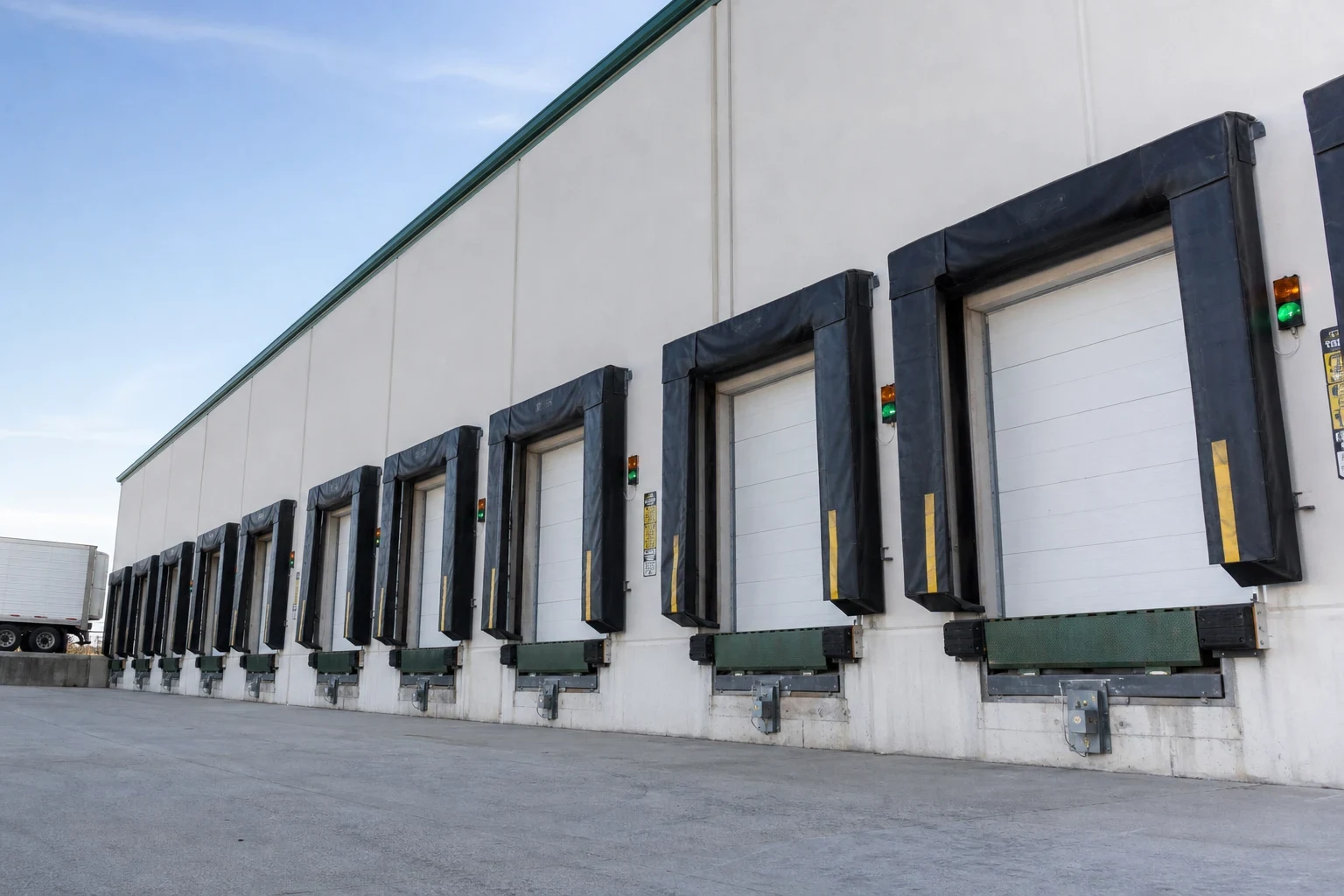
We install dock levelers, vehicle restraints, dock seals, bumpers and overhead doors at warehouses, plants and distribution centers. Every job starts with measurements of your pit, your trailer mix and your power supply, so the equipment fits the first time and the work happens in a window you chose.
New equipment that fits the dock you actually have
Installation is the right call when a position is new, when worn equipment has reached the point where repair money is wasted, or when your trailer fleet has changed and the old setup no longer matches it. A 6-foot leveler with a 16-inch lip that served straight trucks well can struggle with today's air-ride trailers, and a missing vehicle restraint leaves trailer creep to chance.
Most dock installs fail early for reasons that have nothing to do with the brand. The pit is out of square, the curb angle has pulled loose from the concrete, the bumpers sit too low for the trailers you receive, or the leveler was wired to a circuit that was never sized for it. We check those conditions before anything is ordered, so you can budget for the whole job instead of finding the extra work after the old unit is out.
What an installation job includes
Site survey and measurements
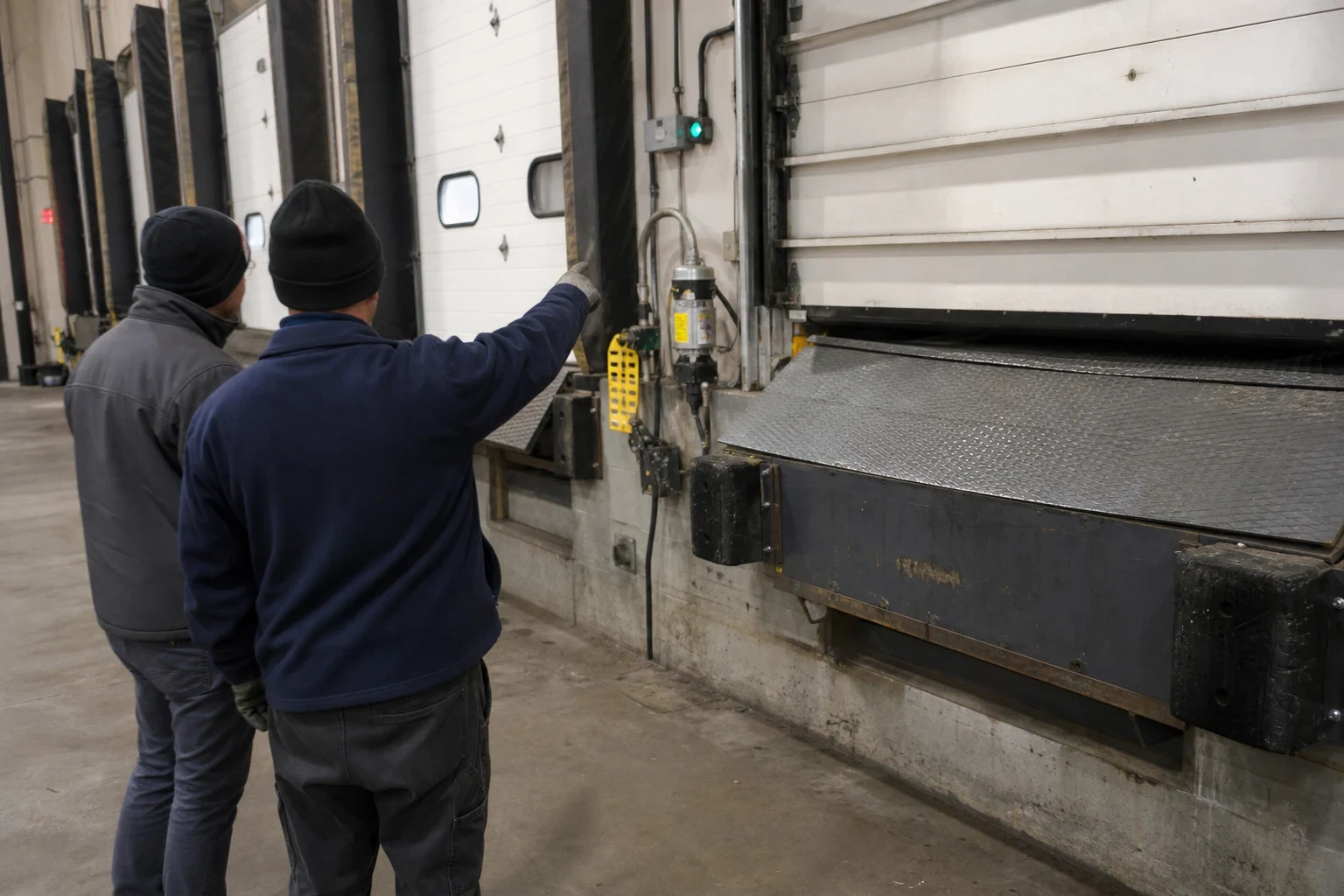
We measure pit length, width and depth, check the pit for square and level, and record dock height against the bed heights of the trailers you actually receive. We also note door opening size and available power.
Dock leveler setting
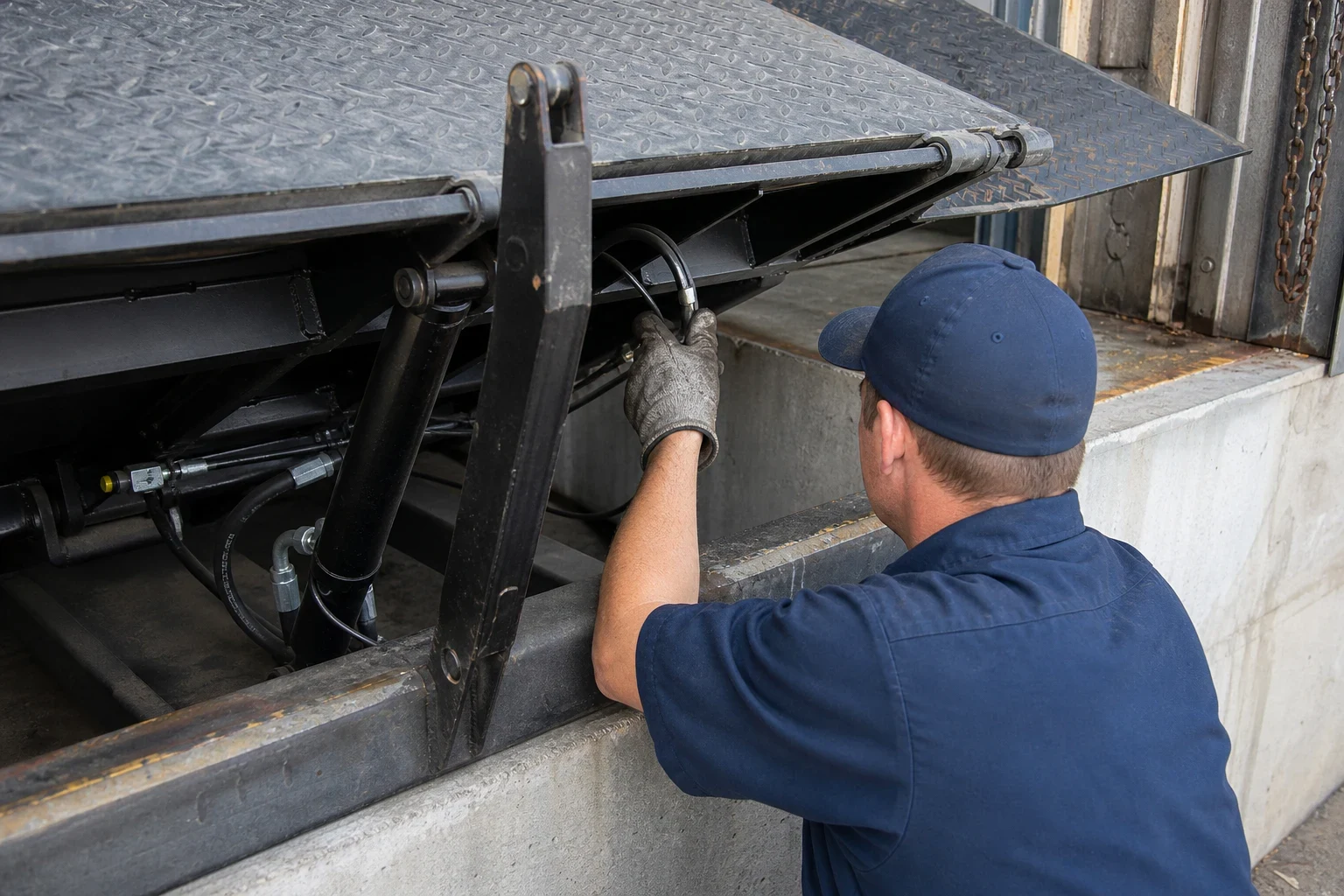
Hydraulic, air-powered or mechanical, the leveler is shimmed and welded to the embedded curb steel, with the lip checked for full extension and the deck checked for travel above and below dock. If the curb angle is cracked or loose, we tell you before we set the new unit on it.
Vehicle restraints and bumpers
We mount restraints to the dock face at the height the hook needs to catch a trailer's rear impact guard, and wire the inside and outside light communication. Laminated rubber or steel-faced bumpers are anchored to project far enough to protect the wall and the leveler lip.
Seals, shelters and doors
Dock seals and shelters are sized to the door opening and the trailer widths you see most, so they close the gap without being torn by off-center backing. When the overhead door is part of the job, it is coordinated with the leveler and seal so nothing binds.
Startup, testing and walkthrough
Every unit is cycled under power, controls are labeled, and your dock staff get a walkthrough on normal operation and lockout. We remove the old equipment and packaging and leave the position swept.
Signs it is time to plan new dock equipment
- Repairs keep stacking up
- When the same leveler needs a hydraulic cylinder this year and a lip hinge next year, the repair total starts to approach replacement. We give you an honest comparison so you can put it in next year's budget.
- Trailers sit too high or too low
- Forklifts bottoming out on the transition or a deck that cannot reach the trailer bed point to a leveler that is too short for your trailer mix. A longer deck lowers the grade your lift trucks climb.
- No restraint, or only wheel chocks
- Chocks get skipped, lost or kicked out. A vehicle restraint holds the trailer at the impact guard and tells the driver and the forklift operator its status through lights.
- Damaged pit or curb steel
- Cracked concrete at the pit edge or curb angle that moves under load usually gets worse with each Lehigh Valley freeze and thaw. It is far cheaper to plan pit repair alongside a new leveler than after a failure.
- A new position or expansion
- Added doors, a change of tenant or a shift to a different carrier fleet all call for equipment specified from scratch.
How the installation runs
- 1
Phone call and site visit
You describe the dock and what you receive. We visit, measure, photograph the pit and power, and talk through the options that fit.
- 2
Written scope and schedule
You get a written line-item scope covering equipment, concrete or steel work and electrical. We agree on dates that avoid your heaviest receiving days, and we tell you if your municipality is likely to require an electrical permit.
- 3
Install day
We isolate the position, remove old equipment, set and weld the new unit, mount restraints and bumpers, and connect controls. Neighboring doors stay open for receiving wherever the layout allows, and a typical single-door leveler swap is planned to finish within a working day.
- 4
Testing and handoff
We run the equipment through full cycles with a trailer when one is available, walk your crew through operation and leave the area clean.
What moves the cost of an installation
The equipment itself is only part of the number. The condition of the pit and the power you have often decide whether a job is simple or involved. We price each item separately so you can see where the money goes and plan phases if that suits your budget.
- Equipment type and capacity
- A mechanical leveler costs less than a hydraulic one, and higher capacity ratings or longer decks add steel and cost. Restraint style and seal size work the same way.
- Pit and concrete condition
- Out-of-square pits, broken curb angle or failed pit walls need concrete and welding work before the new unit can go in.
- Electrical supply
- Hydraulic levelers and powered restraints need a properly sized circuit and disconnect. If there is no power at the position, running it adds to the scope.
- Number of positions and timing
- Doing several doors in one mobilization usually lowers the per-door cost. Night or weekend work to protect receiving can add labor.
Installation questions we hear
- Can you install new equipment in our existing pit?
- Often, yes. Many replacement levelers are built to fit standard pit sizes. We measure first, because a pit that has shifted or a curb angle that has separated needs repair before a new unit will sit flat and wear evenly.
- Should we choose a hydraulic or a mechanical leveler?
- Mechanical units cost less up front but rely on springs and a hold-down that need regular adjustment, and they take more effort to operate. Hydraulic units run on push-button controls and generally see less wear in heavy-use docks. We look at your traffic and budget before recommending one.
- How much downtime should we expect?
- For a single leveler replacement in a sound pit, we plan to have the door back in service within a day. Pit repairs need concrete cure time, so we schedule those around your slowest stretch and keep other doors working.
- Do you install vehicle restraints on docks that already have levelers?
- Yes. Restraints mount to the dock face independent of the leveler, so they can be added to an existing position. We check the wall for solid anchoring and confirm a power source for the light communication system.
- Do you work outside Bethlehem?
- We install equipment at facilities across the Bethlehem area, including Allentown, Hellertown, Catasauqua and Lower Saucon. The Service Areas page lists the rest.
Put your next install on the calendar
Tell us about the dock, the trailers you receive and when your slow weeks fall. We will measure, write up the scope and plan the work so it fits your budget year.